Books
My Novels, Paul Carlile aka Paul C Smith
The Time Machine Chronicles — Book Trailer
Watch the trailer for the fantasy and sci-fi trilogy by Paul Carlile.
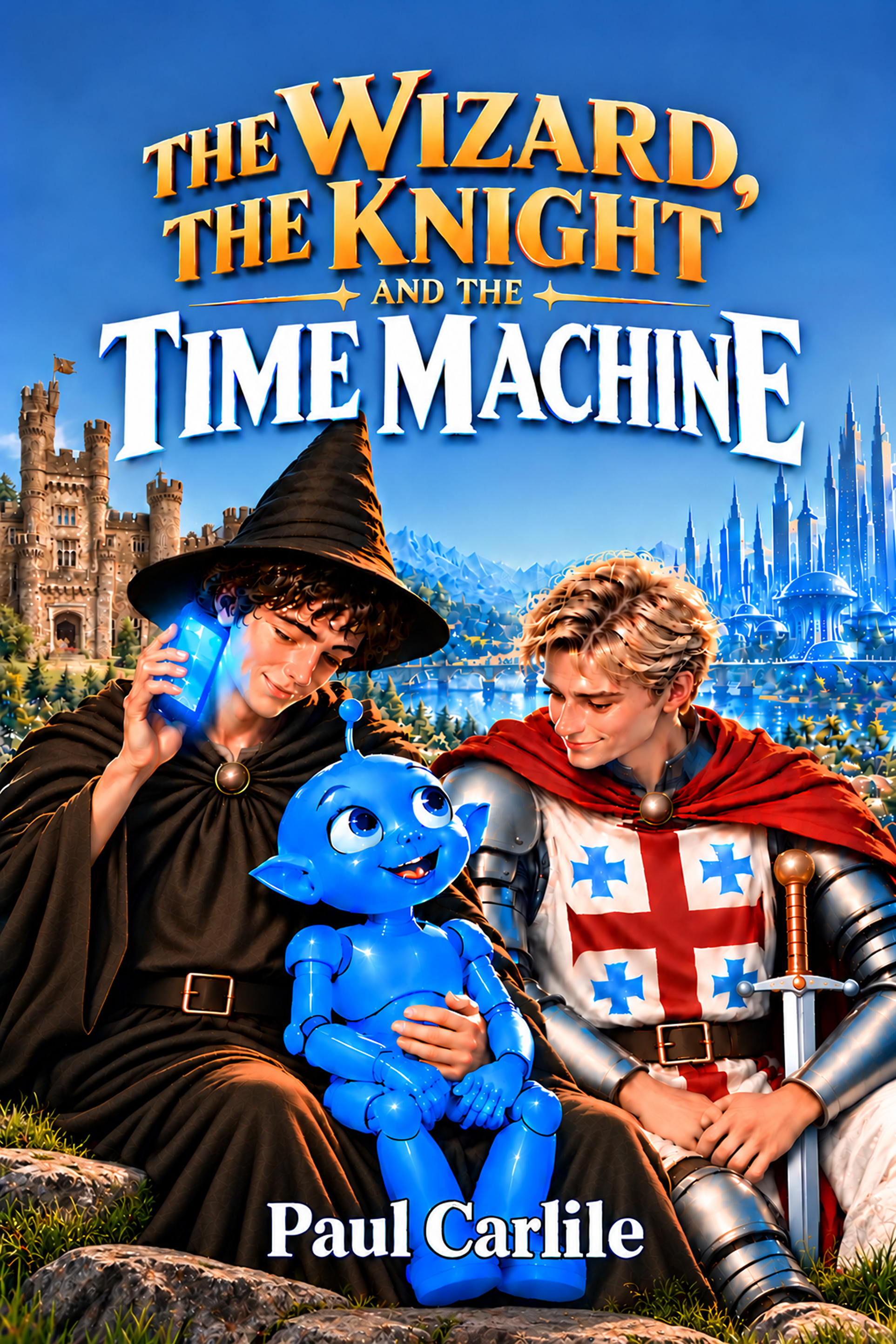
The Wizard, the Knight and the Time Machine
The Time Machine Chronicles Book 1
An ancient coffin. A tech-eating zombie. And apprentice wizard Merlot.
When a time-travelling zombie with a craving for microchips bursts out of the wizard college dungeon, the apocalypse has officially begun. If the meddlers from the future aren’t stopped, mankind is history. Literally.
Merlot has barely mastered his basic spells, but now he’s the only thing standing between the world and an electronic-munching monster. To save the day, Merlot must assemble the world’s most unlikely task force. His wizard teachers, obviously. And a medieval knight and a cheeky elf robot, not so obviously.
The time machine hurtles from a smog-ridden future city to medieval mud and a damp, dirty castle, then back to the school refectory for a shower, tea and cake. Merlot’s journey is a race against time and the distinct lack of indoor plumbing in the Middle Ages.
Packed with British wit, unlikely heroes and the sort of chaos that happens when some people don’t read the instructions. Which unfortunately is everybody.
A cosy, unpredictable blend of sorcery and sci-fi, where magic meets microchips, bad spells make bad smells and magic lamps need a safety catch.

The Wizard, the Lady and the Time Machine
The Time Machine Chronicles Book 2
The heroes return from their adventure in the future, but the knight is restless to go back home. There is unfinished business in his medieval world of mud, smells and total lack of basic plumbing. He must don his armour again and seek justice for the downtrodden poor from the tyranny of the Norman baron. The problem is that he has rather gone off fighting since he became an elite wizard. He turns to his wizard friend Merlot and the cheeky elf robot to come up with a smarter plan.
The time machine is off again, dashing from damp, dirty castle to the far future city, occasionally stopping for tea and cake in the refectory of the comprehensive school for wizards and witches
More fun, just as cosy and possibly even more unpredictable blend of sorcery, sci-fi, and British wit where longships lack loos and laser tasers come in handy.

The Wizard, the Sorceress and the Time Machine
The Time Machine Chronicles Book 3
Izzy may be Merlot’s new friend, but can his college chums really trust her?
After all, she did once try to strangle him. Even friends have disagreements from time to time.
Her ancient sorcery is powerful, unpredictable and dangerously different from the wizard magic taught at the college.
When an eccentric Victorian lord’s disastrous experiment sets strange events in motion, Merlot and Izzy must travel thousands of years into the past to fulfil a hasty promise to a restless spirit.
Elf, the cheeky, dancing robot, insists on joining the adventure because it’s always nicer to face ancient demons and disasters with friends.
A warm, unpredictable fantasy adventure blending time travel, ancient magic and British humour, where bolts of electricity and slimy ectoplasm are never a good combination.

Trampling on History
History was never supposed to be this ridiculous.
Trampling On History races through ten wildly funny eras packed with brave blunders, lucky escapes, and outrageous twists.
Meet Mguggan, the world's first rock star (literally).
Discover how a sacred cat saved a pyramid architect.
See how a cabin boy finds buried treasure where X actually marks the spot.
And watch Vikings try to launch a global furniture empire in a flat-pack ship.
Each fast-paced chapter blends real history with mischievous made-up twists, challenging readers to spot what's true and what's gloriously not, before the final chapter reveals the real facts behind the fun.
Perfect for curious minds and great for reading aloud, Trampling On History is a hilarious journey through the past where history gets turned upside down, trampled on, and occasionally chased by a bison.
The Chronos Trilogy — Book Trailer
Watch the trailer for the time-travel mystery trilogy by Paul Carlile.
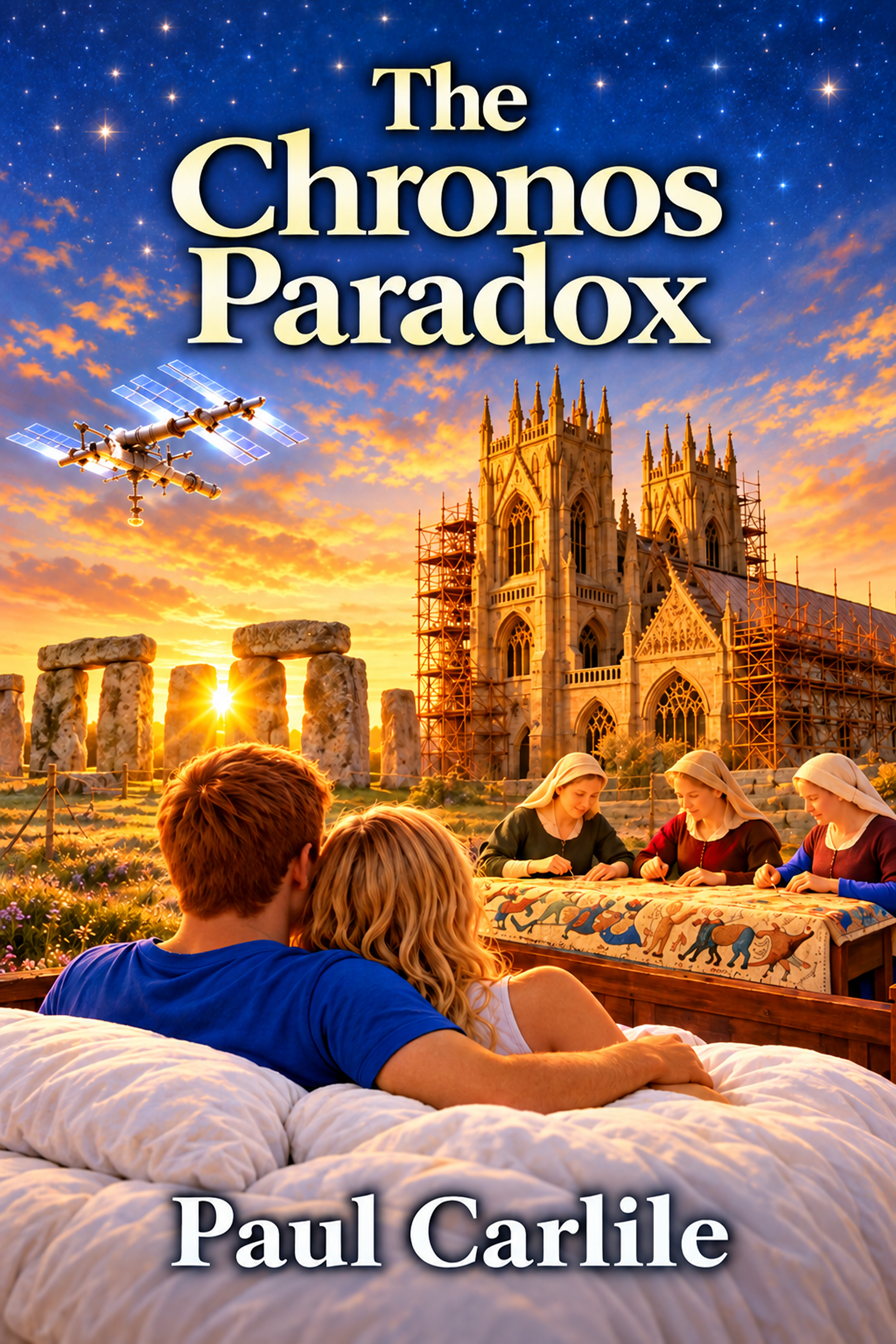
The Chronos Paradox: A Funny Time Travel Mystery
The Chronos Trilogy Book 1
A grotty attic flat. A cup of tea. A slice of cake. And then… Bong!
Leo and Mira wake up in the Middle Ages, dragged from their bed by an irritable monk while a town crier bellowing “Oyez!” shows up at every opportunity.
A gargoyle crashes through the ceiling. The air reeks of smoke, sweat, and spectacularly bad hygiene. And someone is fiddling with history. In a bad way.
Between bacon sandwiches and a nice cup of tea, Leo and Mira are hurled into history’s most inconvenient moments. They have to live with a complete absence of indoor plumbing, while avoiding their murderous landlord. Always a good option.
Because history, as it turns out, isn’t polished or heroic. It’s sooty, smelly, chaotic, very loud, and occasionally unsettlingly quiet. Too quiet…
This is history, warts and all, but with peril mild, and well-earned tea breaks.
The Chronos Paradox is a delightfully eccentric romp through time, and a reverberating bell keeps waking you when you deserve a lie-in.

The Kairos Entanglement: Passing Through Time
The Chronos Trilogy Book 2
On a flip of a coin, they don’t know if they are coming or going… Bong!
When Leo is whisked into the squalor of medieval times, he would kill for a bacon sandwich.
Mira says that an unhygienic sandwich would more likely kill him.
Leo tries to get used to the smell, and Mira misses the ensuite, but their mission is critical. History needs a nudge in the right direction. Just a gentle push, not a shove.
Mira helps arrogant Galileo to chill out while Leo helps build bridges, literally.
The Kairos Bell is a cheerfully eccentric romp through time.
There are lots of curious details that are weird but true. I know this because I looked them up.
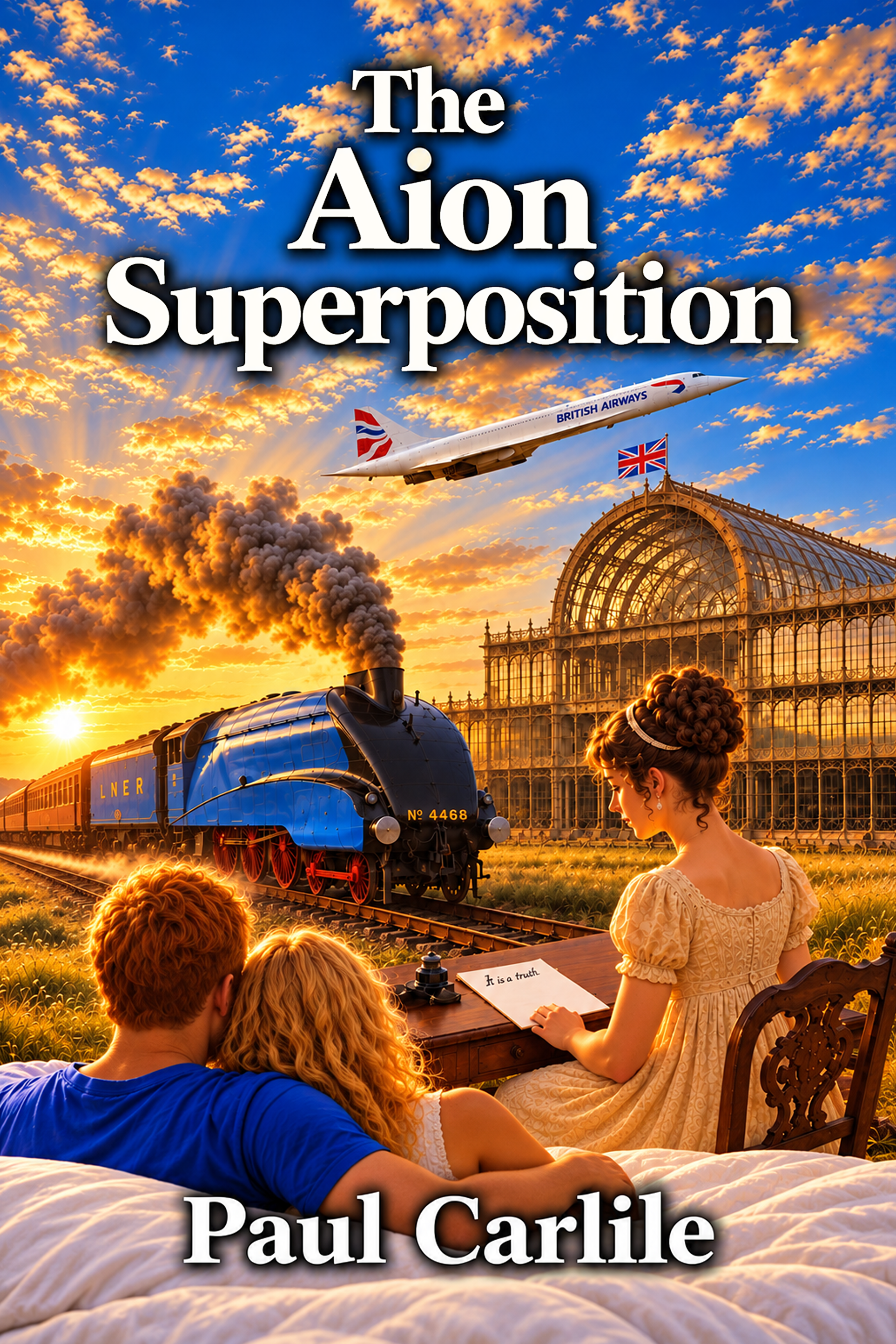
The Aion Superposition: The Time Trial
The Chronos Trilogy Book 3
Mira and Leo have been there and done that with every… Bong!
They have solved the entanglement mystery but still have no idea why, what or who is behind it all.
Is the steam engine just a smokescreen? Is the Crystal Palace clear-cut? Is the writing on the wall for Jane Austen? Who knows, but they are determined to find out one way or another. Probably the other.
It seems all Greek to them until they realise it really is.
The Aion Superposition is the finale to the Chronos Trilogy, where all is revealed, probably, yet still retains a cosy U certificate.

Aria and Tone: A Romantic Comedy
Tone has barely had a single thought he doesn’t blurt out loud.
Aria has spent years learning to keep her feelings to herself.
When a yoga class and a shared love of opera throw them together, an improbable friendship begins. The occasional glass of Sauvignon Blanc, missed sat nav turns, and an irresistible urge to have fun draw them closer, but unknown to each other, they both carry embarrassing secrets from their past. Well, don’t we all?
Through wrong turns, high drama, and revelations, Tone and Aria discover that life, like opera, is full of passion, surprises, and the risk of saying, or not saying, exactly what you feel.
A witty, double-length comic romance about missed chances, belligerent sat navs, and practical jokes.
Warning. Contains enthusiastic blurting, mild peril, car park chaos, and absolutely no actual singing. It is a book, after all.

Urchin's Kart Club
Would you stop an eleven-year-old using your petrol mower, yet let him drive a racing kart?
You expect him to do well in class, yet forgive him for nearly burning the school down.
A child of that age has no known use except as someone to blame when it was your fault. Although a light rub-down with a moist urchin may assist with kart rebuilding. Unfortunately, urchins are very slippery and therefore difficult to grip.
When one enthusiastic eleven-year-old joins his school's kart club, he and his long-suffering father are plunged into a world of racing karts, fraught workshops, forgotten tools, breakdowns and more mud and rain than tarmac.
What could possibly go wrong? Well, almost everything. Actually, it was everything.
Drawing Inspiration

Drawing on the Right Side of the Brain
OVER 4 MILLION COPIES SOLD WORLDWIDE
'You will quickly amaze and delight yourself' India Knight, Sunday Times
Everybody has artistic talent and can be good at drawing. You only have to tune into the creative, intuitive and artistic side of the brain - the right side - and you will be able to draw accurate and imaginative portraits, landscapes, and still life. By setting you simple tasks which only the right side of the brain can perform, Betty Edwards heightens your awareness of shape, colour and form, makes you see more clearly and intuitively, and within a remarkably short time, gives you the pleasure and satisfaction of being a competent artist.
My Son's Novel (I'm so proud of him)

Frost Fire
A highly unusual and compelling middle-grade survival fantasy - the perfect winter read!
'This is a truly magical adventure with a real human touch.' BOOKTRUST
' ... ambitious and original world-building make this thrilling debut stand out.' BOOKSELLER
Chosen for the honour of bonding with a frostsliver - a fragment of the sentient glacier that crests her icy home - Sabira embarks on the dangerous pilgrimage to the top of the mountain.
But when a huge avalanche traps her on the glacier and destroys the pass, Sabira is determined to find another way home.
In order to survive, she must face up to the merciless mountain – but there are dark and fiery secrets hiding in its depths ...
Shortlisted for the Times/Chicken House Children’s Fiction Competition.
An icy, Tibetan-themed setting combine in a truly stand-out middle-grade adventure.
Gorgeous and atmospheric cover by the brilliant Karl James Mountford.